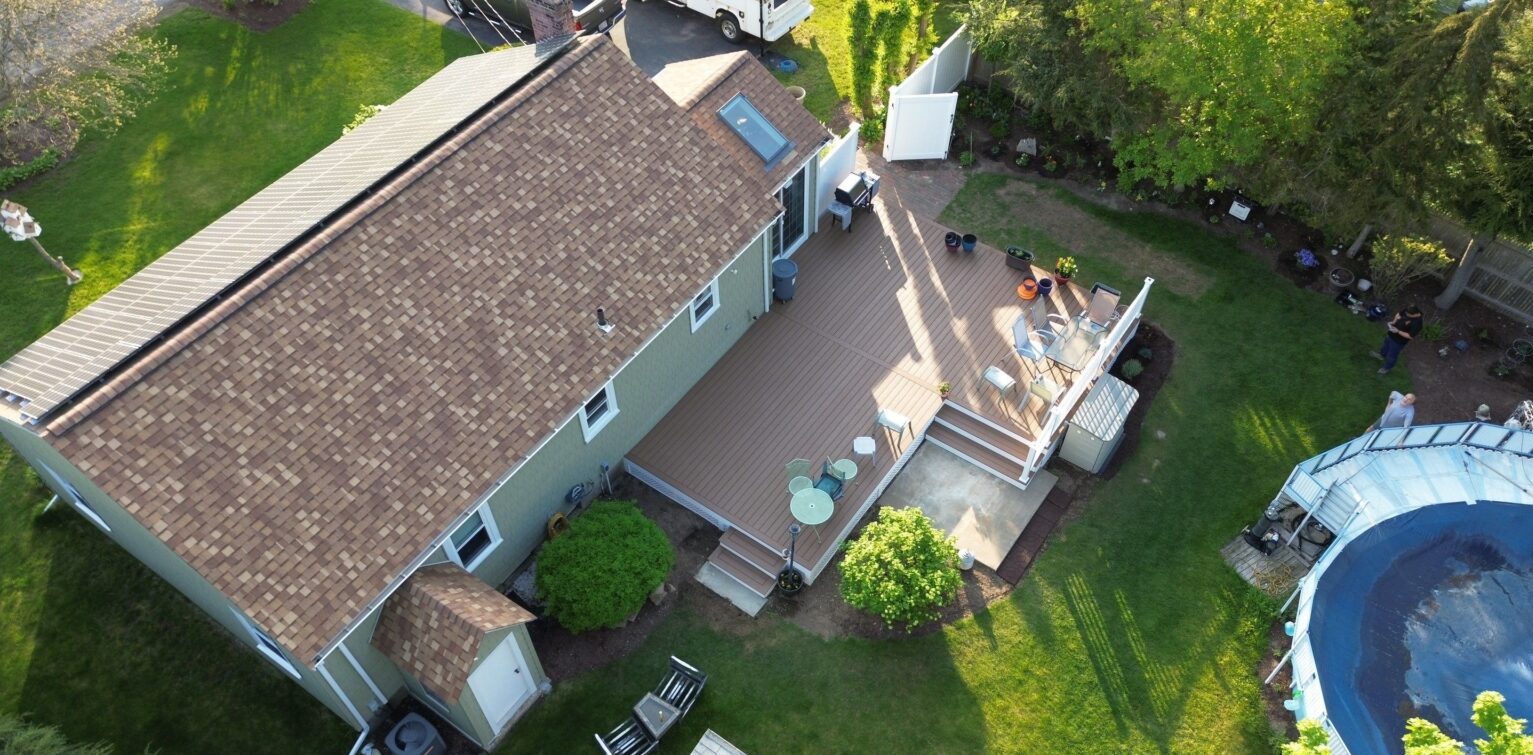
The Core Challenge In Massachusetts and Rhode Island, a deck cannot simply be a wooden platform attached to the house. Due to our wet springs, humid summers, and the harsh freeze-thaw cycle of our winters, “standard” decks often end up rotting, warping, or feeling like a disconnected island. The goal is to build a space that feels like a seamless extension of your living room.
Why Traditional Decks Fail Here Many older decks were built as afterthoughts. In our climate, this leads to two main issues:
- Structural Failure: If footings aren’t deep enough (below the frost line), the ground heaves in January, causing boards to pop.
- Poor Usability: Decks built without checking sun exposure become unusable scorching zones in July, or have layouts that block garden views.
Pre-Construction Checklist for Homeowners Before hiring a contractor, we recommend three checks:
- Sun Analysis: Check the light at 10 AM, 2 PM, and 6 PM to decide if you need a roof or pergola.
- Traffic Flow: Ensure the path from the kitchen to the outdoor table is direct, not an obstacle course.
- Drainage: Look for water pooling after rain; this dictates where structural posts can safely go.
3 Ways to Solve the “Disconnected Deck” Problem
- The Surface Swap: Keep the structure if it’s sound, but upgrade to composite decking and swap heavy wood rails for cable/glass to open the view.
- The Wide Transition: Install a 4-panel sliding door and a single-level deck to blur the line between inside and outside.
- The Covered Deck: Extend the roofline to create a multi-season room with screens or heaters, perfect for rain or bugs.
Myths vs. Reality
- Wood vs. Composite: While wood is natural, the chemicals to treat it aren’t. High-end composite resists our climate better and doesn’t turn grey.
- Bugs: In New England, failing to plan for airflow or screening often makes a deck unusable at dusk.
We recently fixed a home on the MA/RI border with a steep drop-off. By replacing a “cage-like” old deck with a multi-level composite design, we turned a blocked view into a tiered living space that connects the kitchen directly to the tree line. The result isn’t just a new deck; it’s actual added square footage to the home’s living space.
Ready to reclaim your space? Let’s talk about what fits your deck.